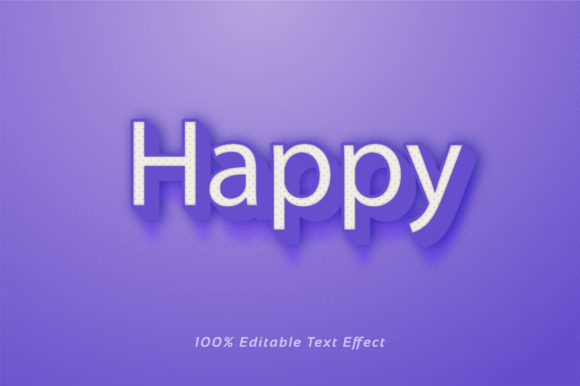
Happy 3D Text Effect: Vector Design
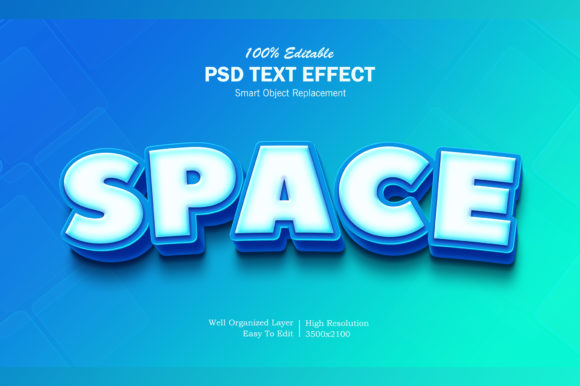
In a digital landscape saturated with static images and flat graphics, Happy 3D Text Effect offers a refreshing burst of depth and personality. It is not merely a decorative element; it is a versatile tool that bridges the gap between professional typography and playful creativity. Whether you are a seasoned graphic designer looking to add flair to a brand identity or a small business owner wanting to make your social media posts stand out, this fully editable vector design provides the flexibility needed to create impactful visuals without the steep learning curve associated with complex 3D modeling software.
The core appeal of this asset lies in its simplicity and adaptability. Unlike raster-based designs that pixelate when resized, this vector format ensures that every curve, shadow, and highlight remains crisp regardless of scale. You can enlarge it for a billboard-sized banner or shrink it down for a favicon, and the quality never decreases. This technical reliability allows creators to experiment freely, knowing that their final output will always look polished and professional.
Why Vector-Based Typography Matters
Before diving into specific applications, it is essential to understand why choosing a vector design for your text effects is a strategic move. In the world of digital content, consistency is key. A Happy 3D Text Effect built on vector paths offers several distinct advantages over pre-rendered image files:
- Scalability Without Loss: As mentioned, the ability to resize without quality degradation is crucial. This means one file can serve multiple purposes across different platforms, from high-resolution print materials to low-res web thumbnails.
- Editability: The "click and type" functionality democratizes design. You do not need advanced skills in Adobe Illustrator to change the font, adjust the size, or modify the color palette. This ease of use empowers non-designers to maintain brand consistency.
- Lightweight Files: Vector files are typically smaller in file size compared to high-resolution PNGs or PSDs. This leads to faster loading times for websites and easier sharing via email or cloud storage.
- Customization Potential: Because the elements are separate vectors, you can deconstruct the effect. Want to change the gradient? Remove the drop shadow? Rotate the perspective? These adjustments are straightforward, allowing for endless variations from a single base template.
Creative Applications Across Industries
The versatility of this Happy 3D Text Effect makes it suitable for a wide array of industries. Here is how different professionals can leverage this asset to enhance their visual communication.
For Marketers and Social Media Managers
Social media is a visual-first platform where attention spans are short. Using a dynamic 3D text effect can significantly increase engagement rates. Imagine running a promotional campaign for a summer sale. Instead of standard bold text, using the Happy 3D Text Effect with bright, vibrant colors and a playful angle can convey excitement and energy. You can easily swap out the text for limited-time offers, creating urgency while maintaining a cohesive aesthetic. The ability to quickly edit the text means you can update campaigns in real-time as trends shift.
For Educators and Content Creators
Educational materials often struggle with being visually engaging. For bloggers, podcasters, or online course creators, headers and titles are critical for retention. Applying this 3D effect to chapter titles or key takeaways can break up dense text and guide the reader’s eye. It adds a layer of professionalism and care to your content, signaling to your audience that you value their experience. Furthermore, because the design is editable, you can match the text style to your personal brand guidelines, ensuring that your educational resources feel unique and branded.
For Small Business Owners and Entrepreneurs
Brand identity is everything for new businesses. A logo or a tagline rendered in a fun, approachable 3D style can humanize a brand. Consider a bakery using the Happy 3D Text Effect for their menu boards or packaging labels. The texture and depth of the text can mimic the richness of their products, creating a subconscious link between the visual and the taste. Similarly, a tech startup might use a sleeker version of the effect for their presentation decks, adding a touch of modernity without appearing overly corporate.
Practical Tips for Effective Usage
While the tool itself is easy to use, achieving professional results requires a thoughtful approach to design principles. Here are some practical recommendations to ensure your Happy 3D Text Effect enhances rather than distracts from your message.
- Maintain Readability: Depth and shadows are great, but they should never compromise legibility. Ensure there is sufficient contrast between the text color and the background. If the 3D effect introduces dark shadows, make sure the text itself is light enough to pop against those shadows.
- Limit Color Palettes: While the effect allows for vibrant colors, using too many hues at once can result in visual chaos. Stick to a consistent color scheme that aligns with your brand or the mood of the project. Often, two or three complementary colors are more effective than a rainbow spectrum.
- Use White Space: Give your 3D text room to breathe. Crowding the text with other elements can diminish the impact of the depth effect. Ample white space draws the eye directly to the text and emphasizes its dimensionality.
- Contextual Alignment: Ensure the style of the 3D effect matches the tone of your content. A playful, rounded 3D font works well for children’s books or casual blogs, but might be inappropriate for a legal firm or a financial report. Always consider your audience before applying the effect.
Adapting to Different Platforms
One of the most significant benefits of this vector design is its cross-platform compatibility. However, each platform has its own nuances. For Instagram Stories or TikTok overlays, you might want to use larger, bolder text settings to ensure visibility on small mobile screens. For website headers, you might opt for a slightly more subtle effect to avoid overwhelming the user interface. By adjusting the scale and opacity within the editable vector layers, you can tailor the same asset to fit perfectly into any digital environment.
Furthermore, if you are printing materials such as flyers, business cards, or banners, the vector nature of the Happy 3D Text Effect ensures that the edges remain sharp. This is particularly important for large-format prints where pixelation would be immediately obvious. You can export the design in CMYK color mode for print-ready accuracy, ensuring that the colors you see on screen are the colors that appear on paper.
Conclusion
The Happy 3D Text Effect is more than just a trendy graphic element; it is a powerful communication tool. Its combination of aesthetic appeal, technical flexibility, and ease of use makes it an invaluable asset for anyone looking to elevate their visual content. By understanding how to apply it effectively across different contexts and audiences, you can create designs that are not only beautiful but also functional and engaging. Embrace the freedom of vector editing, experiment with different styles, and let your creativity flow with a tool that adapts to your vision, not the other way around.